Neuroanatomy & Neurodegeneration
What is Neuroanatomy?
Neuroanatomy is the study of the structure and organization of the nervous system, particularly the brain and spinal cord. The human brain contains approximately 86 billion neurons and hundreds of trillions of connections between them. Understanding neuroanatomy helps us comprehend how different brain regions work together to control thoughts, emotions, movements, and bodily functions.
The brain can be divided into several major regions, each with specific functions and connections. These regions work in coordinated networks to process information, generate responses, and maintain homeostasis. The intricate organization of the brain reflects millions of years of evolutionary development, resulting in a highly sophisticated organ that is still not fully understood.
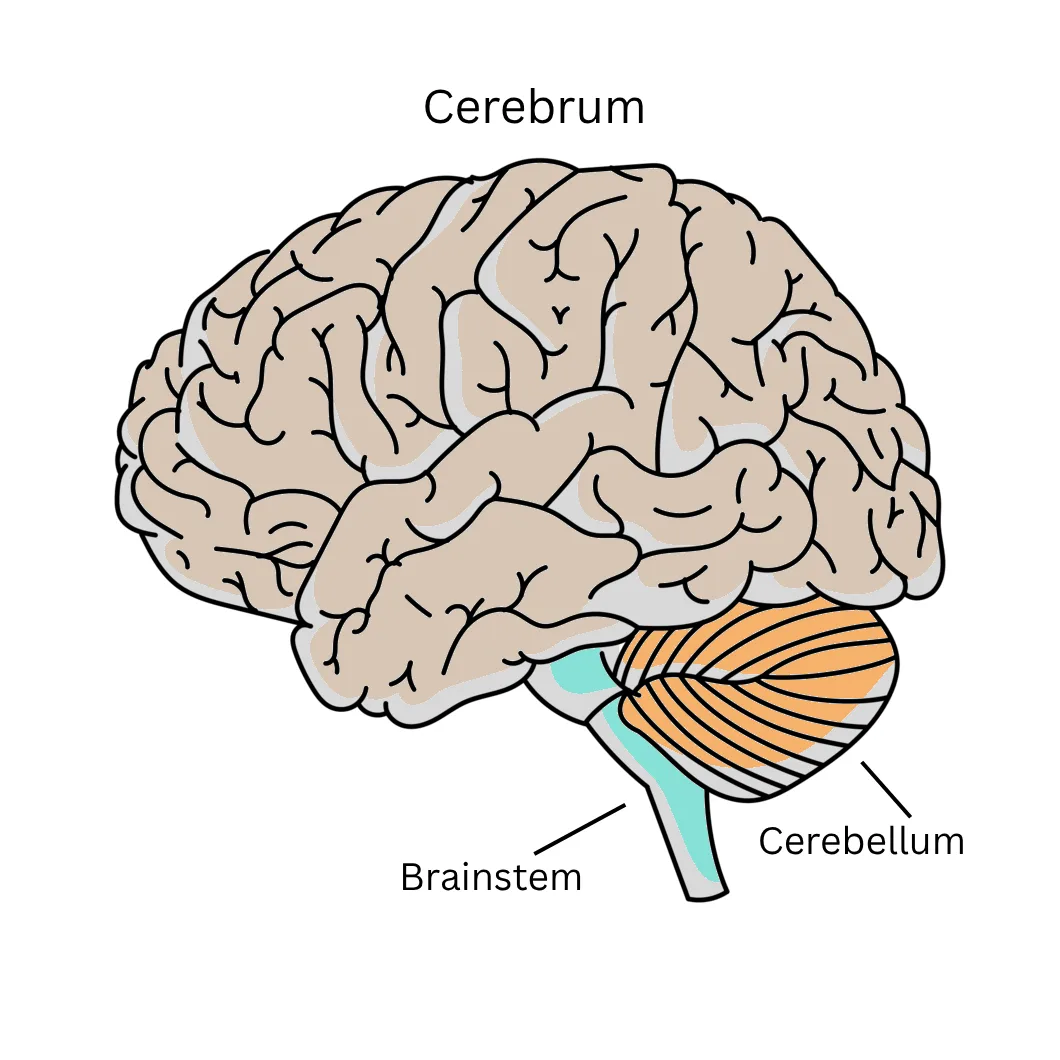
Major Brain Regions
Cerebrum
The largest part of the brain, responsible for higher brain functions including thought, action, and sensory processing.
Cerebellum
Located at the back of the brain, this region coordinates voluntary movements and maintains balance and posture.
Brainstem
Connects the cerebrum and cerebellum to the spinal cord and controls many basic life-sustaining functions.
Cerebrum
The largest part of the brain, responsible for higher brain functions including thought, action, and sensory processing.
Key Functions:
- Conscious thought
- Voluntary movement
- Language processing
- Sensory perception
- Learning and memory
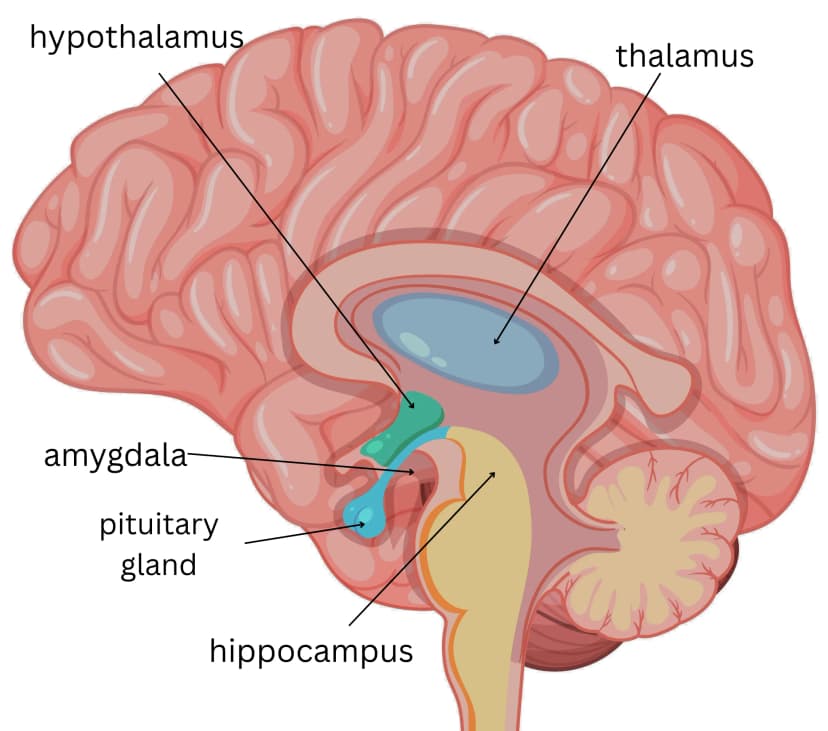
Key Brain Structures
These essential brain structures play critical roles in sensory processing, hormone regulation, motor control, and emotional processing, with several being key components of the limbic system—a network deeply involved in regulating emotion, motivation, and memory.
Thalamus
Hypothalamus
Pituitary Gland
Basal Ganglia
Hippocampus
Amygdala
Cellular Components
Neurons
The basic building blocks of your brain and nervous system - these are the cells that process information, send messages, and control everything you think, feel, and do.
Each neuron has three main parts: dendrites that receive signals, an axon that carries signals, and terminals that release chemical messengers to communicate with other neurons.
Glial Cells
Helper cells that support and protect neurons, maintain brain health, and help form the insulation around nerve fibers.
Different types include astrocytes (maintain brain environment), oligodendrocytes (create myelin insulation), microglia (immune defense), and Schwann cells (support peripheral nerves).
Synapses
The connection points where neurons communicate with each other using chemical messengers called neurotransmitters.
This communication system is the foundation of all brain activity, learning, and memory formation - it allows neurons to share information and adapt over time.
Myelin Sheath
A fatty coating that wraps around nerve fibers like insulation on electrical wires, helping signals travel quickly and efficiently.
Created by oligodendrocytes in the brain and spinal cord, myelin acts like a speed booster, allowing nerve impulses to travel up to 100 times faster than unmyelinated fibers.
Understanding Neurodegenerative Diseases
These progressive disorders affect the brain and nervous system over time. Our role is to provide thorough neurological evaluation, help clarify diagnoses, and connect patients with appropriate specialists and resources.
Common Conditions
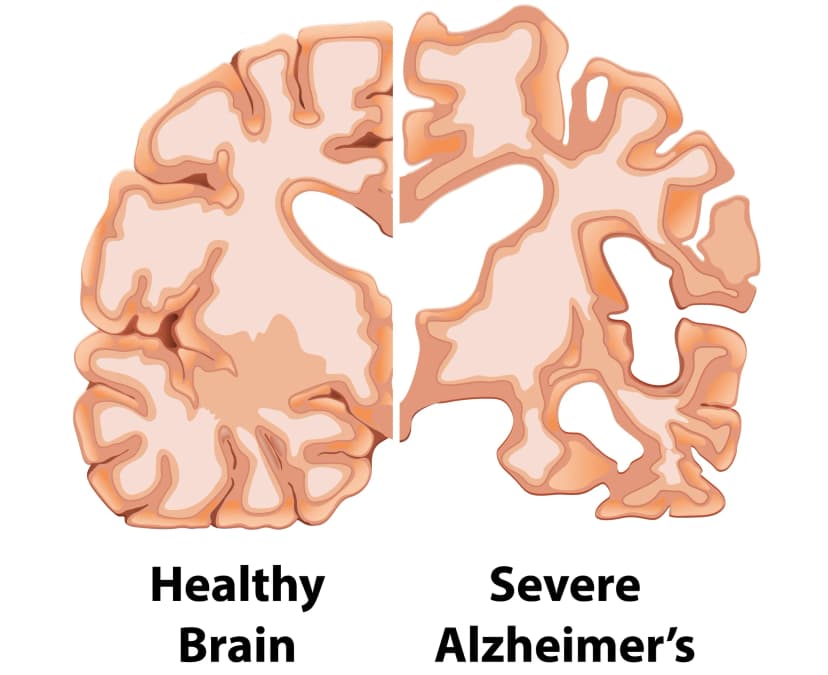
Alzheimer's Disease & Other Dementias
Parkinson's Disease
Amyotrophic Lateral Sclerosis (ALS)
Multiple Sclerosis
Prion Diseases
Huntington's Disease
What Are Neurodegenerative Diseases?
Neurodegenerative diseases are a group of conditions in which nerve cells in the brain or spinal cord progressively lose their ability to function and may eventually die. This process can interfere with communication between the brain and the rest of the body, leading to difficulties with movement, memory, speech, behavior, or other essential functions. Over time, these changes tend to worsen, often creating significant challenges for patients and their families.
Examples of neurodegenerative conditions include Alzheimer's disease and related dementias, Parkinson's disease, Huntington's disease, and amyotrophic lateral sclerosis (ALS). Although each condition has distinct features, they share the hallmark of gradual progression and long-term impact on quality of life. Early recognition and accurate diagnosis are important for planning care, managing symptoms, and connecting individuals with appropriate specialists, support services, and resources.
Common Symptoms
- Memory Loss & Confusion:Significant memory problems, confusion, and difficulty with planning or problem-solving that interfere with daily life are hallmark symptoms of dementias like Alzheimer's disease.
- Tremor, Stiffness, or Slowed Movement:These are classic motor symptoms of Parkinson's disease, often starting subtly and progressing over time, affecting balance and coordination.
- Balance Problems or Frequent Falls:Difficulty with gait and balance can be a symptom of several neurodegenerative conditions, increasing the risk of falls.
- Difficulty Speaking or Swallowing:Known as dysarthria and dysphagia, these symptoms can arise in conditions like ALS and Parkinson's as the muscles controlling these functions weaken.
- Mood or Personality Changes:Depression, anxiety, apathy, and irritability can be early signs of neurodegenerative diseases, sometimes appearing before motor or major cognitive symptoms.
- Progressive Muscle Weakness or Twitching:A primary symptom of motor neuron diseases like ALS, where the gradual loss of nerve cells leads to muscle atrophy and weakness.
Key Pathological Features
Neuron Loss and How It Causes Symptoms
Neurons are the brain's essential workers - they're specialized cells that process information, send signals, and control everything we think, feel, and do. In neurodegenerative diseases, these vital brain cells begin to die off over time. This isn't random damage; it specifically affects areas responsible for memory, movement, or thinking. As more neurons die, the brain functions they control start to fail, causing the symptoms we see in conditions like memory loss in Alzheimer's or movement problems in Parkinson's.
White Matter and Communication Disruption
White matter is like the brain's superhighway system - it's the network of nerve fibers that carries messages between different parts of the brain, much like how roads connect different cities. Think of it as the brain's communication cables that allow different regions to work together smoothly. In many neurodegenerative disorders, this communication network gets damaged. The protective myelin sheath around nerve fibers can break down, or the fibers themselves can be lost. This disrupts the high-speed communication between brain areas, contributing to slowed thinking, coordination problems, and other cognitive and motor symptoms.
Protein Aggregates / Hallmark Disease Features
Proteins are like tiny machines that keep our cells working properly. In neurodegenerative diseases, these proteins can sometimes fold incorrectly and clump together into toxic buildup, almost like how garbage can pile up and block a roadway. For example, Alzheimer's disease creates amyloid plaques and tau tangles, while Parkinson's develops Lewy bodies made of a protein called alpha-synuclein. These protein clumps interfere with normal brain cell function and contribute to neuron death, and doctors can use them as important clues to diagnose specific diseases.